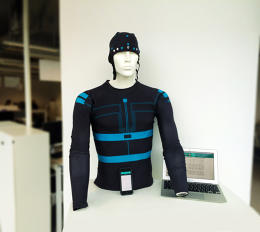
When any person hears the term “health wearables” they most regularly bring to mind units like the Jawbone Up or the Misfit Flash that assist customers monitor their steps taken and calories burned. however progressively more startups are turning far from the patron health sector to center of attention on wearable technology that might actually store lives. One such startup is BioSerenity, which last week gained the first annual iiAwards, an extension of the prestigious Grands Prix de l’innovation awarded by using the town of Paris. the point of interest of the iiAwards is to recognize an effective startup that’s developing expertise that can have a very meaningful impression on individuals’s lives. BioSerenity’s winning product is the WEMU, a biosensor-weighted down wearable that uses the power of big data to diagnose and treat one of the most least understood ailments—epilepsy. I spoke with BioSerenity’s CEO, Pierre-Yves Frouin—an engineer with a history in the pharmaceutical and well being diagnostics box—to find out about the software and see just how big of a transformation wearables could make to sufferers’ lives someday.
a tough diagnosis
help One, help Many
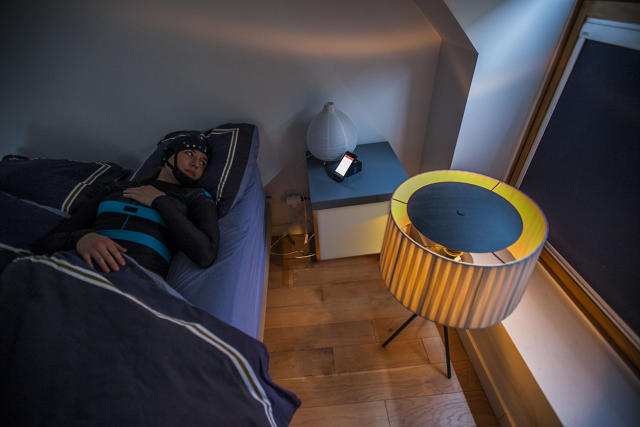
but the WEMU doesn’t just cease at appearing as a warning and diagnostic tool for particular person patients. The 1/3 leg of its stool is large knowledge. After the WEMU app data seizure task, it anonymizes it and uploads it to the cloud, the place that knowledge can be used via researchers in the container who can study it to examine extra about the illness. this allows the WEMU to not just assist particular person sufferers, but probably all of them. “Epilepsy is not one, but several problems mixed, and there’s nonetheless a lot to study,” says Frouin, who worked for Johnson & Johnson’s medical diagnostics division before launching BioSerenity. “the problem used to be that too few patients were recorded having seizures. via increasing the collection of patients recorded sooner than, all over, and after seizures, loads will be discovered and the mechanisms of evolution of the disease will have to be better understood. large-data instruments are additionally giving researchers an entire new method of structuring the seek for patterns.”
the way forward for Wearables
(157)

